Nukleotidy: structure, functions, and why they matter in living cells
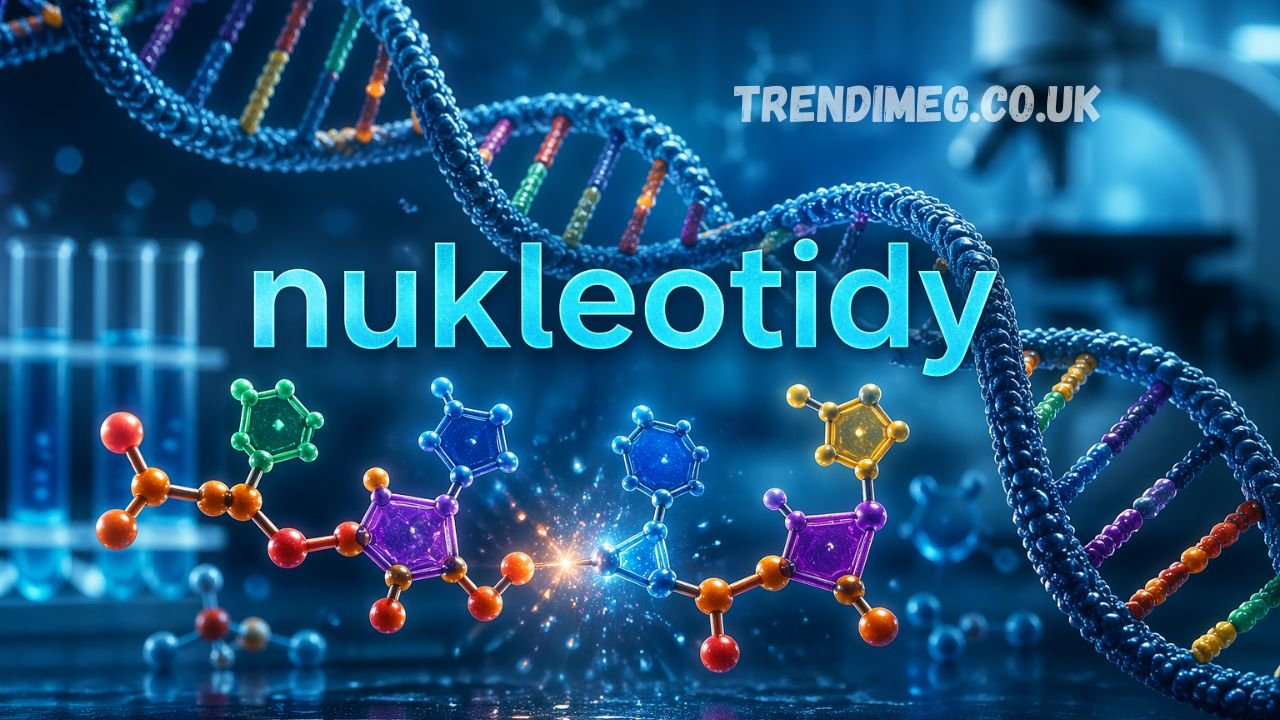
Nukleotidy sit at the center of everything that makes life work, yet most people only hear about them in passing during biology classes. They are the tiny units that build DNA and RNA, which means they carry the instructions that shape every organism. Without nukleotidy, there would be no genetic code, no energy transfer inside cells, and no way for biological systems to function properly. What makes them interesting is not just their role in genetics, but how deeply they are involved in everyday cellular processes. Once you understand how nukleotidy work, a lot of biology starts to make more sense.
what nukleotidy are made of and how they are structured
At a basic level, nukleotidy are made up of three components that work together as a single unit. Each one includes a nitrogen-containing base, a five-carbon sugar, and a phosphate group. These parts are not random; each plays a specific role in how nukleotidy behave and connect with one another. The sugar and phosphate form the backbone, while the base carries the actual information. This structure allows nukleotidy to link together into long chains that become DNA or RNA.
The difference between DNA and RNA comes down to small structural changes in nukleotidy. DNA contains deoxyribose sugar, while RNA uses ribose, which has one extra oxygen atom. This small variation changes stability and function, making DNA better for long-term storage and RNA more flexible for short-term tasks. The bases also differ slightly, with thymine appearing in DNA and uracil replacing it in RNA. These details may seem minor, but they are essential for how genetic systems operate.
how nukleotidy form dna and rna chains
Nukleotidy connect through what are known as phosphodiester bonds, forming long strands that create genetic material. Each nucleotide links to the next through its sugar and phosphate groups, creating a stable backbone. The sequence of bases along this chain determines the genetic instructions stored within it. This sequence acts like a coded language that cells can read and interpret. The entire system depends on the precise order of nukleotidy.
In DNA, two strands of nukleotidy run in opposite directions and pair through their bases. Adenine pairs with thymine, while cytosine pairs with guanine, forming the familiar double helix structure. In RNA, the structure is usually single-stranded, which allows it to fold into different shapes. These shapes are important for RNA’s role in protein synthesis. Without properly arranged nukleotidy, none of this structural organization would be possible.
different types of nukleotidy found in cells
Nukleotidy can be grouped in different ways depending on their structure and function. One of the most common ways is by looking at the type of base they contain. Another approach is based on whether they belong to DNA or RNA systems. Understanding these categories helps clarify how nucleic acids function inside cells.
Here are the main types based on nitrogenous bases:
- Purines, which include adenine and guanine, have a double-ring structure
- Pyrimidines, including cytosine, thymine, and uracil, have a single-ring structure
Nukleotidy are also classified based on the sugar component:
- Deoxyribonucleotides, which are part of DNA
- Ribonucleotides, which are part of RNA
These categories are not just for classification; they directly affect how nukleotidy behave in chemical reactions and biological processes. The shape and bonding properties of each type influence how genetic material is stored and copied.
the role of nukleotidy in storing genetic information
One of the most important roles of nukleotidy is storing genetic information in DNA. The sequence of these molecules determines everything from eye color to how cells function. Each group of three nucleotides forms a codon, which corresponds to a specific amino acid. These amino acids then build proteins, which carry out most cellular activities. This process is precise and depends entirely on the correct arrangement of nukleotidy.
Errors in the sequence of nukleotidy can lead to mutations, which sometimes result in disease. However, mutations can also drive evolution by introducing variation. This dual role makes nukleotidy both stable and adaptable at the same time. The ability to store and transmit information accurately is what allows life to continue across generations. Without nukleotidy, heredity would not exist.
how nukleotidy support energy transfer in cells
Nukleotidy are not only about genetics; they are deeply involved in energy systems as well. The most well-known example is ATP, which acts as the main energy carrier in cells. ATP stores energy in its phosphate bonds, which can be released when needed. This energy powers everything from muscle contraction to active transport across membranes. In this way, nukleotidy are essential for keeping cells alive and functioning.
Other nucleotide-based molecules also play roles in metabolism and energy transfer. These include compounds that help enzymes carry out chemical reactions. Without these molecules, many metabolic pathways would stop working. This shows that nukleotidy are not limited to DNA and RNA but are part of broader cellular systems. Their versatility is one of the reasons they are so important.
signaling and regulatory functions of nukleotidy
Cells rely on communication to coordinate their activities, and nukleotidy are part of that system. Certain modified nucleotides act as signaling molecules inside cells. These molecules help transmit messages from one part of the cell to another. This allows cells to respond to changes in their environment quickly and efficiently. Without these signals, cellular processes would become disorganized.
Some nucleotides also regulate enzyme activity and gene expression. They can turn processes on or off depending on the needs of the cell. This level of control is essential for maintaining balance within biological systems. Nukleotidy act as both messengers and regulators, which adds another layer to their importance. Their involvement in signaling makes them key players beyond genetics.
real world applications of nukleotidy in science and medicine
The study of nukleotidy has led to major advances in science and medicine. Researchers use them to understand genetic diseases and develop treatments. Modern technologies like gene editing rely heavily on manipulating nucleotide sequences. This allows scientists to target specific genes and make precise changes. These applications continue to expand as research progresses.
Here are some practical uses of nukleotidy:
- Development of antiviral and anticancer drugs
- Genetic testing and personalized medicine
- Biotechnology and genetic engineering
- Research in evolutionary biology
These uses highlight how nukleotidy move from theory into real-world impact. They are not just abstract concepts but tools that shape modern science. Their importance continues to grow as new discoveries are made.
dietary sources and biological importance of nukleotidy
Nukleotidy are naturally present in many foods, and the body can also produce them. They are found in items like meat, fish, and certain plant-based foods. While the body can synthesize nukleotidy, dietary intake can still support growth and repair. This is especially important during periods of rapid development or recovery. The balance between internal production and external intake helps maintain cellular health.
In infants and growing individuals, nucleotides play a role in immune function and tissue development. Some nutritional products even include added nucleotides for this reason. Their presence in food connects molecular biology with everyday life. This makes the topic more relevant beyond the lab. Nukleotidy are part of both internal biology and external nutrition.
conclusion
Nukleotidy are more than just building blocks of DNA and RNA; they are central to how life operates at every level. From storing genetic information to powering cellular processes, their roles are wide-ranging and essential. Understanding nukleotidy gives insight into how cells function, how traits are inherited, and how modern science tackles disease. Their influence extends from microscopic reactions to large-scale biological systems. Once you see how much depends on nukleotidy, it becomes clear they are one of the most important components of life.
faqs
- what are nukleotidy in simple terms
Nukleotidy are small molecules that form DNA and RNA and carry genetic information in living organisms. - how many types of nukleotidy are there
There are five main types based on bases: adenine, guanine, cytosine, thymine, and uracil. - why are nukleotidy important for the body
They help store genetic information, produce energy, and support cellular communication. - where can nukleotidy be found
They are found in all living cells and also in foods like meat, fish, and some vegetables. - what is the difference between nucleotides and nucleosides
Nucleotides have a phosphate group, while nucleosides do not.










Post Comment